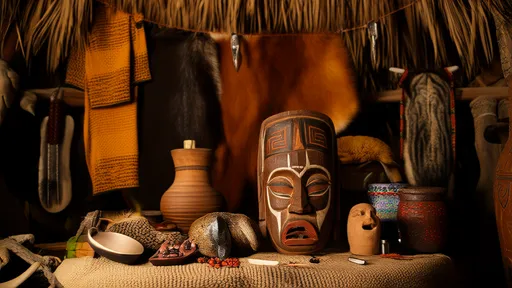
In the dimly lit halls of museums and private collections worldwide, African masks silently command attention. These are not mere artifacts; they are frozen moments of spiritual dialogue, carved from wood and imbued with the breath of ancestors. To the uninitiated eye, they might appear as exotic curiosities, but within their grooves and pigments lies a complex language of symbolism, a visual theology that has guided communities for centuries. The story of African masks is one of deep cultural resonance, a narrative that stretches from sacred forest groves to the white-walled galleries of contemporary art, continually challenging and expanding our understanding of art, ritual, and identity.
The creation of a traditional mask is never a mere artistic endeavor. It is a sacred process, often initiated by a spiritual need and guided by strict ritual protocols. The carver, far from being a simple artisan, is a mediator between the human and the spiritual realms. The selection of the wood is itself a prayer; certain trees are chosen for their inherent qualities—strength, elasticity, or spiritual significance—and offerings are made to the spirit of the tree before it is felled. The act of carving is a gradual revelation, an uncovering of the spirit that already resides within the wood. The final forms—whether abstract and geometric or startlingly realistic—are not arbitrary. Every curve, every sharp angle, and every hollowed-out eye is a deliberate part of a symbolic lexicon. The addition of pigments, feathers, animal hair, or metal plates further layers meaning, connecting the mask to the animal kingdom, the celestial bodies, or specific ancestral energies.
To comprehend the mask, one must first abandon Western conceptions of art for art's sake. In their traditional contexts, these masks are not static objects to be displayed and admired. They are living, functional instruments of transformation. They are the pivotal element in performances that mark the key moments of human and community life: births, initiations, harvests, funerals, and the installation of chiefs. When a dancer dons the mask and its accompanying full-body costume, a profound metamorphosis occurs. The individual's identity is erased; he becomes a vessel, a temporary dwelling place for the spirit or ancestor the mask represents. The dance is not entertainment; it is a conduit for communication. Through movement and sound, the spirit speaks to the community, offering wisdom, enforcing social order, healing the sick, or guiding the souls of the departed.
The symbolism etched into each mask is a direct reflection of the values, fears, and cosmology of the people who created it. A common theme across many cultures is the reverence for ancestors. Masks often serve as a physical link to the departed, ensuring their continued presence and guidance within the community. Animal symbolism is equally pervasive. The agile antelope might represent agricultural fertility and the hope for a bountiful harvest, while the formidable buffalo embodies raw power, protection, and the unwavering strength of the community. The hyena, often a trickster figure, can symbolize the dangerous and unpredictable forces that must be controlled. Human features, too, are loaded with meaning. An elongated forehead may signify wisdom and contemplation, a large mouth the power of oratory, and specific scarification patterns can immediately denote tribal affiliation and social status. This visual language is not universal; it is intensely local, a code that can only be fully deciphered within its specific cultural context.
The journey of the African mask into the global consciousness is a story intertwined with colonialism, appropriation, and, eventually, a slow and complex reckoning. European colonists and collectors, often misunderstanding their function, removed countless masks from their ritual contexts, placing them in natural history museums as ethnographic specimens of "primitive" cultures. This displacement severed the mask from its meaning, turning a dynamic spiritual entity into a silent, exotic trophy. The early 20th-century European avant-garde artists—Pablo Picasso, Amedeo Modigliani, and others in their circle—encountered these masks in Parisian museums and flea markets. They were captivated not by the spiritual narratives but by the radical aesthetics: the fragmentation of form, the defiance of naturalistic representation. This encounter famously ignited the sparks of Cubism and Primitivism, revolutionizing Western art. Yet, this adoption was largely one-sided, a borrowing of form without a true understanding of soul, often reinforcing stereotypes about African art being "naive" or "instinctual."
In the wake of independence movements across Africa and the rise of Pan-Africanism, a powerful reclamation began. African intellectuals, artists, and nations started to critically re-examine the narrative surrounding their cultural heritage. The mask was no longer seen through a solely ethnographic or modernist lens but as a cornerstone of cultural identity and a testament to sophisticated philosophical thought. Contemporary African artists have engaged with the mask not as a relic to be replicated, but as a rich conceptual vocabulary to be mined and reinterpreted. Artists like Romuald Hazoumè of Benin creates powerful modern "masks" from discarded plastic jerricans, commenting on consumerism, spiritual pollution, and the legacy of the oil trade in West Africa. His work, and that of many others, dialogues directly with traditional symbolism, using its language to speak about present-day realities, thus ensuring the form remains vitally relevant and critically engaged.
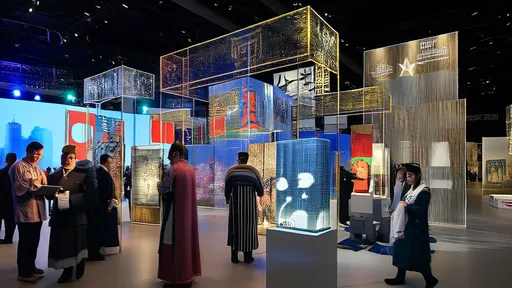
Today, the African mask exists in a dual reality. In its homeland, it continues to play a vital, albeit evolving, role in many communities, adapting to new religions and modern pressures while retaining its core spiritual significance. Simultaneously, in the global arena, it occupies a complex space. The ethical questions surrounding the acquisition and repatriation of masks in Western museums are more pressing than ever, as institutions are forced to confront their colonial pasts. The market for authentic antique masks continues to thrive, raising concerns about looting and the preservation of cultural property. Yet, this global fascination also creates a platform for a new, more respectful dialogue. Scholars, curators, and artists from Africa and the diaspora are now leading the conversation, offering modern interpretations that recenter the mask's indigenous meaning while exploring its global impact.
The enduring power of the African mask lies precisely in this duality: its deep roots in specific local traditions and its boundless capacity for reinterpretation. It is a symbol that refuses to be pinned down. It is a sacred object, a revolutionary muse, a contested artifact, and a source of contemporary artistic innovation. It challenges us to look beyond the surface, to listen for the stories whispered from within the wood. These masks are more than art; they are a profound expression of humanity's endless quest to give form to the formless, to make tangible the bonds that connect the living, the dead, and the world of spirits. They remind us that some truths are not spoken but performed, not written but carved, and that understanding requires not just observation, but reverence.

By /Aug 28, 2025
By /Aug 28, 2025
By /Aug 28, 2025

By /Aug 28, 2025
By /Aug 28, 2025
By /Aug 28, 2025
By /Aug 28, 2025

By /Aug 28, 2025
By /Aug 28, 2025
By /Aug 28, 2025

By /Aug 28, 2025

By /Aug 28, 2025
By /Aug 28, 2025
By /Aug 28, 2025
By /Aug 28, 2025
By /Aug 28, 2025
By /Aug 28, 2025
By /Aug 28, 2025
By /Aug 28, 2025
By /Aug 28, 2025