Throughout the annals of art history, the narrative has predominantly been shaped by the achievements of male artists, leaving the profound contributions of women largely obscured in the shadows. The legacy of female artists, though rich and transformative, has often been relegated to footnotes or entirely erased from mainstream discourse. This oversight not only distorts our understanding of artistic evolution but also perpetuates a cultural imbalance that undervalues the creative prowess of half the population. The story of women in art is not merely one of absence but of active suppression and systemic neglect, a gap that scholars and curators are only beginning to address with the seriousness it deserves.
In the Renaissance period, a time celebrated for its artistic flourishing, women faced formidable barriers to professional recognition. Despite these constraints, figures such as Artemisia Gentileschi emerged with powerful works that challenged contemporary norms. Her painting Judith Slaying Holofernes is a visceral depiction of female agency and strength, themes that were radical for their time. Yet, for centuries, her work was often attributed to her father or other male contemporaries, a common fate for many women artists whose identities were subsumed by patriarchal narratives. Similarly, Sofonisba Anguissola gained renown as a portraitist in the Spanish court, but her innovations in intimate, dynamic portraiture were frequently overshadowed by her male peers like Titian or Van Dyck.
The Baroque and Rococo eras saw further contributions from women, though again, their recognition was circumscribed by societal expectations. Elisabeth Louise Vigée Le Brun became one of the few women admitted to the French Royal Academy, yet her success was often framed through her role as a court painter rather than as an independent artistic force. Her technically masterful and psychologically nuanced portraits, such as those of Marie Antoinette, displayed a sophistication that rivaled any male counterpart, but historical accounts minimized her influence, focusing instead on her gender and personal life. This pattern of gendered criticism—where women’s art was evaluated through the lens of femininity rather than merit—persisted well into the modern era.
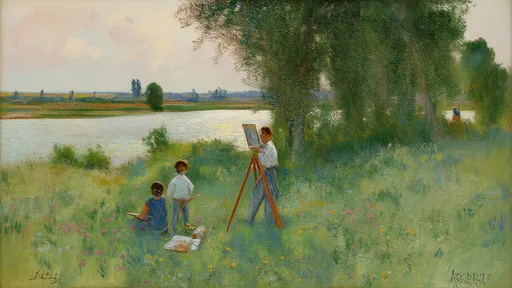
The 19th century witnessed a slight shift as movements like Impressionism began to challenge traditional academies. Berthe Morisot and Mary Cassatt were integral to the development of Impressionism, contributing works that captured the nuances of domestic life and female subjectivity with unprecedented sensitivity. Morisot’s loose brushwork and exploration of light were on par with Monet’s, yet her exhibitions were often reviewed with condescension, critics emphasizing her "feminine touch" rather than her technical innovations. Cassatt, though better recognized in her lifetime, was frequently pigeonholed as a painter of mothers and children, a categorization that limited the perception of her broader artistic ambitions. Their male colleagues, by contrast, were celebrated for their revolutionary break from tradition, a dichotomy that highlights the biased frameworks of art criticism.
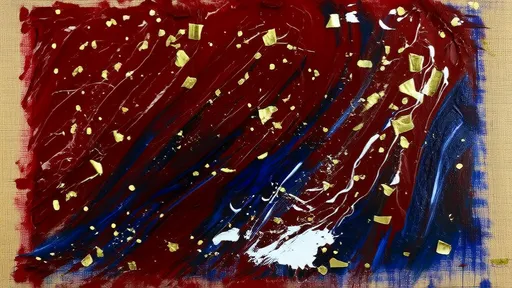
Moving into the early 20th century, female artists played pivotal roles in avant-garde movements, though their participation was routinely marginalized. Hilma af Klint created abstract paintings years before Kandinsky or Malevich, yet her groundbreaking work was largely unknown until decades after her death, suppressed by a art world unwilling to acknowledge a woman as a pioneer of abstraction. Similarly, Dora Maar was long remembered merely as Picasso’s muse rather than as a formidable Surrealist photographer and painter in her own right. Her photographic experiments and political engagements were critical to the cultural milieu of the time, but her legacy was overshadowed by the mythologizing of male genius.
The mid-20th century brought new forms of exclusion, particularly in the male-dominated spheres of Abstract Expressionism and Minimalism. Lee Krasner, despite her significant innovations, was often dismissed as Jackson Pollock’s wife, her dynamic compositions and energetic style receiving scant attention compared to her husband’s. It was only later in life that she gained belated recognition, a testament to the persistent barriers women faced in achieving timely acclaim. Likewise, Agnes Martin’s serene, grid-based paintings were sometimes misinterpreted through a gendered lens, critics attributing their subtlety to a "feminine sensibility" rather than engaging with their philosophical depth and rigorous formal discipline.
The feminist art movement of the 1960s and 1970s marked a turning point, with artists like Judy Chicago and Miriam Schapiro explicitly addressing the erasure of women from art history. Chicago’s The Dinner Party became an iconic work, reclaiming the narratives of historical and mythical women through monumental installation. This period also saw the rise of collectives such as the Guerrilla Girls, who used data and wit to expose the sexism and racism of the art establishment. Their activism forced institutions to confront their biases, leading to incremental increases in the representation of women in galleries and museums. However, this progress was hard-won and remains incomplete, as the canon continues to prioritize male narratives.
In contemporary times, the contributions of female artists are gradually being reassessed, though challenges persist. The market still undervalues work by women, with auction prices and major retrospectives disproportionately favoring men. Artists like Yayoi Kusama or Kara Walker have achieved international acclaim, yet their success is often framed as exceptional rather than indicative of systemic change. Kusama’s immersive installations and Walker’s provocative silhouettes engage with themes of identity, trauma, and history, expanding the boundaries of what art can address. Their visibility, however, does not erase the ongoing struggles of countless women whose work remains overlooked due to race, class, or geographic location.
The digital age offers new opportunities for redress, with online archives and social media platforms enabling broader access to neglected works. Initiatives like the Wikipedia Edit-a-Thons focused on women artists aim to correct informational gaps, while databases such as the National Museum of Women in the Arts provide resources for researchers and enthusiasts. These efforts are crucial, but they must be supported by institutional commitments—acquisitions, exhibitions, and scholarly research—that fully integrate women into the historical narrative. Without this, the risk of tokenism remains, where a few celebrated figures are used to veil deeper inequities.
Reckoning with the neglected legacy of female artists is not about rewriting history but expanding it to reflect a more truthful and inclusive story. Their contributions have shaped artistic movements, challenged aesthetic conventions, and enriched our cultural heritage in innumerable ways. As we continue to uncover and celebrate these voices, we move closer to an art history that honors creativity in all its forms, regardless of gender. The journey toward equity is ongoing, but each rediscovered artist, each restaged exhibition, and each revised curriculum brings us closer to a future where the term "artist" is truly gender-neutral.

By /Aug 28, 2025
By /Aug 28, 2025
By /Aug 28, 2025

By /Aug 28, 2025
By /Aug 28, 2025
By /Aug 28, 2025

By /Aug 28, 2025

By /Aug 28, 2025
By /Aug 28, 2025
By /Aug 28, 2025
By /Aug 28, 2025

By /Aug 28, 2025
By /Aug 28, 2025

By /Aug 28, 2025
By /Aug 28, 2025
By /Aug 28, 2025

By /Aug 28, 2025
By /Aug 28, 2025
By /Aug 28, 2025

By /Aug 28, 2025