In the vast tapestry of art history, few movements have pursued the essence of form with the fervor and intellectual rigor of Modernism. Emerging in the late 19th and early 20th centuries, this was not merely a stylistic shift but a profound philosophical reorientation. Artists, architects, and designers embarked on a collective journey to strip away the ornamental excesses of the past, which they saw as dishonest and burdened by historical weight. They sought to uncover a new visual language, one that was authentic to the modern age—an era defined by industrialization, technological advancement, and a rapidly changing social order. This was a quest for truth in materials, structure, and function, a belief that by reducing form to its most fundamental elements, one could achieve a higher, more universal and pure aesthetic experience.
The intellectual underpinnings of this movement were deeply influenced by a desire to create art that reflected the spirit of the times. Thinkers and creators grew disillusioned with the ornate and often sentimental styles of the 19th century, viewing them as out of touch with the new realities of urban life and mechanized production. There was a growing conviction that art needed to be relevant, to speak a language of clarity, efficiency, and abstraction that mirrored the logic of the machine and the clarity of scientific thought. This was not an abandonment of beauty, but a redefinition of it. Beauty was no longer to be found in decorative detail but in the inherent qualities of the materials themselves, in the elegance of a structural solution, or in the harmonious balance of geometric forms. It was a beauty born of intellect and principle.
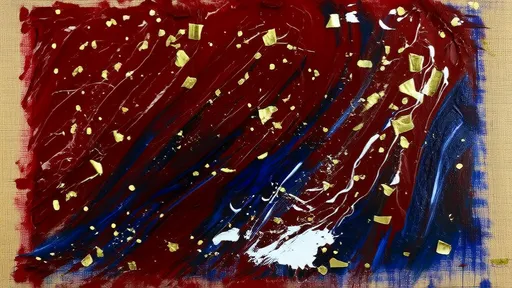
This pursuit of simplification manifested powerfully in the world of painting and sculpture. The journey began with the Post-Impressionists, like Paul Cézanne, who treated nature in terms of the cylinder, the sphere, and the cone, reducing complex scenes to their essential geometric components. This analytical approach was a crucial precursor. It paved the way for the more radical abstractions of Piet Mondrian, whose compositions of black grids and primary colors represent the ultimate reduction of visual art to its most basic elements of line and color. He believed he was uncovering the universal constants that underpinned all of reality. Similarly, the Russian Constructivists rejected the idea of art for art's sake, instead creating geometric sculptures and reliefs that emphasized construction, spatial dynamics, and industrial materials like glass and steel. For them, pure form was intrinsically linked to utopian social ideals.
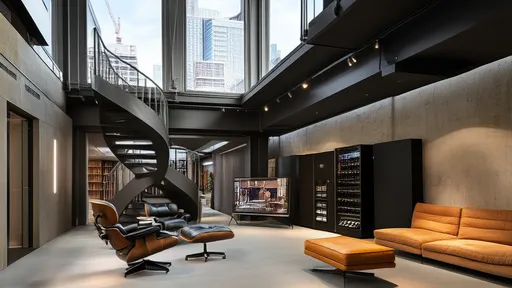
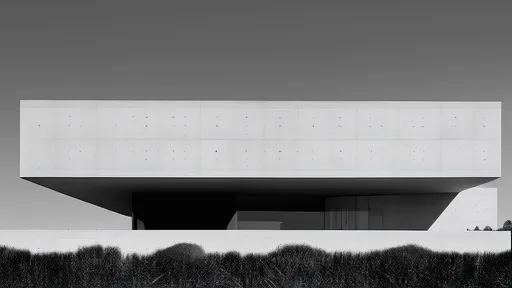
In architecture, the call for purity and simplification produced some of the most iconic and enduring structures of the modern era. The famous axiom "form follows function", coined by Louis Sullivan and championed by the Bauhaus school, became a mantra. Architects like Walter Gropius, Ludwig Mies van der Rohe, and Le Corbusier argued vehemently against unnecessary decoration. A building's beauty, they professed, should be derived from the logical expression of its purpose, the honesty of its materials—whether concrete, steel, or glass—and the clarity of its structural system. Mies van der Rohe's pursuit of "less is more" led to sleek, open-plan designs that used modern technology to create spaces of breathtaking simplicity and luminous transparency. The goal was to create a timeless, universal architecture that could improve human life through light, space, and efficiency.
The design world, particularly the influential Bauhaus school in Germany, became a laboratory for these ideas. Here, the boundary between fine art and applied art was dissolved. The focus was on creating well-designed, functional objects for everyday use that could be mass-produced, making good design accessible to all. Bauhaus designers like Marcel Breuer and Marianne Brandt embraced new materials like tubular steel and aluminum, creating furniture and household items characterized by their geometric forms, lack of adornment, and stark elegance. A Breuer chair was not a piece of ornate carpentry; it was a logical composition of sleek lines and curves, its beauty residing in its structural logic and functional clarity. This ethos championed a pure, rational aesthetic that was directly tied to utility and modern production methods.
However, the path of Modernism was not without its complexities and internal critiques. The very notion of a "universal" style eventually came under scrutiny. Later critics argued that the movement's intense focus on simplification and abstraction could, at times, lead to a certain coldness or sterility, neglecting human emotion, cultural specificity, and historical context. The stark white walls and rigid geometries of some International Style buildings were accused of creating alienating environments that ignored the nuances of human experience and local tradition. Furthermore, the movement's frequent alignment with industrial capitalism and mass production raised questions about its role in a consumer society. Was it creating a truly democratic aesthetic or merely a new, minimalist style for the elite?
Despite these critiques, the legacy of Modernism's formal exploration is undeniably profound and pervasive. Its principles fundamentally reshaped our visual environment. The clean lines of contemporary furniture, the glass-and-steel skyscrapers that define our city skylines, the minimalist interfaces of our digital devices—all are heirs to the Modernist quest for simplification and purity. The movement taught us to find beauty in structure, to value honesty in materials, and to appreciate the power of empty space. It was a bold, sometimes flawed, but ultimately revolutionary endeavor to align art and design with the core principles of the modern world. It challenged creators to constantly ask: what is essential? This question continues to resonate, ensuring that the aesthetic and philosophical inquiries of Modernism remain as relevant today as they were a century ago.
By /Aug 28, 2025
By /Aug 28, 2025

By /Aug 28, 2025

By /Aug 28, 2025
By /Aug 28, 2025

By /Aug 28, 2025

By /Aug 28, 2025

By /Aug 28, 2025
By /Aug 28, 2025

By /Aug 28, 2025
By /Aug 28, 2025

By /Aug 28, 2025

By /Aug 28, 2025

By /Aug 28, 2025

By /Aug 28, 2025

By /Aug 28, 2025

By /Aug 28, 2025
By /Aug 28, 2025
By /Aug 28, 2025

By /Aug 28, 2025