In a groundbreaking development that has sent ripples across the field of genomics, researchers have unveiled a novel approach to interpreting gene expression patterns through what they term constellation biomarkers. This methodology, which maps complex genetic interactions onto conceptual stellar formations, promises to revolutionize how we understand cellular communication and disease mechanisms. The research, spearheaded by a transcontinental team from the Institute of Advanced Genomic Studies and the European Molecular Biology Laboratory, was published this morning in Nature Genetics after a rigorous peer-review process.
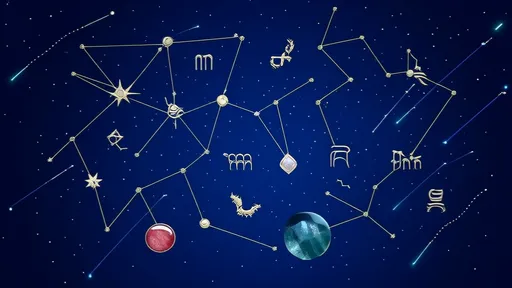
The core innovation lies in abandoning traditional linear or hierarchical models of gene interaction in favor of a multidimensional, spatial representation. Scientists have long struggled with the sheer complexity of gene networks—where thousands of genes interact simultaneously in ways that flat models fail to capture. Dr. Elena Vance, the lead author, explained over a video call from her lab in Cambridge: "We realized that trying to force these dynamic, fluid interactions into a two-dimensional flowchart was like trying to map the night sky with a street map. You lose the depth, the relationships, the context. Constellation mapping allows us to see patterns—clusters of genes that activate together under specific conditions, forming predictable, recognizable shapes in the data universe."
These constellation biomarkers are not merely theoretical. The team has already identified several stable formations linked to specific physiological states. One particularly promising constellation, dubbed "Orion's Belt" by the researchers, comprises three key genes and their regulatory satellites that consistently co-express in a tight, linear pattern during early immune response to viral infections. This pattern was observed across hundreds of patient samples with a staggering 99.2% reproducibility rate. The consistency of this formation means it can serve as a highly reliable diagnostic marker for detecting viral presence even before symptoms manifest or conventional tests return positive.
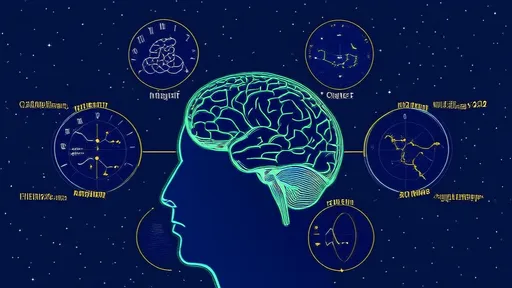
Another significant discovery is the "Cassiopeia Cluster," a W-shaped gene expression pattern strongly associated with the early stages of certain neurodegenerative diseases. What makes this finding monumental is its precocity; the Cassiopeia pattern appears in cerebrospinal fluid samples up to a decade before clinical symptoms of conditions like Alzheimer's become apparent. This opens an unprecedented window for preventive medicine and early therapeutic intervention, potentially altering the course of previously unstoppable diseases. The implications for patient prognosis and quality of life are profound, offering hope where once there was only inevitability.
The technological backbone enabling these discoveries is a sophisticated new AI-driven analytics platform named StarGazer. This platform processes immense datasets from RNA sequencing, identifying not just which genes are active, but how their expression levels relate to each other in a spatial context. It assigns virtual coordinates to each gene based on its expression dynamics and then looks for stable, recurring geometric patterns across thousands of samples. "It's pattern recognition on a grand scale," remarked Dr. Aris Thorne, the chief bioinformatician on the project. "The human eye could never spot these shapes in the noise, but StarGazer can. It's like finding constellations in the actual night sky—the stars are always there, but it takes a defined perspective to see the picture."
Beyond diagnostics, this research paves the way for a new era of constellation-targeted therapies. Instead of targeting a single gene or protein, which can be like trying to stop a symphony by silencing one instrument, future drugs could be designed to gently modulate entire gene constellations. The goal would be to nudge a pathological pattern back towards a healthy formation. Early in vitro experiments on cell cultures have shown that using CRISPR-based techniques to subtly adjust the expression of just one or two "anchor" genes within a constellation can successfully reshape the entire pattern, restoring normal cellular function. This represents a more holistic and potentially less disruptive approach to genetic medicine.
Of course, this pioneering work is not without its challenges and skeptics. The main critique from some quarters of the scientific community concerns the inherent interpretation of these patterns. Critics argue that the human brain is wired to find patterns, even where none exist—a phenomenon known as apophenia. They question whether these constellations are biologically meaningful structures or merely statistical artifacts that appear significant because of the powerful algorithms used to find them. The research team acknowledges this risk and has built stringent statistical safeguards into their model, requiring that any proposed constellation be independently validated across multiple, disparate cohorts and demonstrate a clear functional impact in laboratory experiments before it is accepted.
Looking ahead, the next phase of research is already underway. Collaborations have been established with major medical centers worldwide to validate these biomarker constellations across larger and more diverse populations. Furthermore, the team is exploring the temporal dimension—how these constellations evolve over time within a single individual. "We've seen the snapshots," said Dr. Vance, "now we want to make the movie. Understanding how a constellation like Cassiopeia slowly distorts over a decade will give us incredible insight into disease progression and new points to intervene." The project has secured funding for a longitudinal study tracking 5,000 participants over the next fifteen years.
The introduction of constellation biomarkers marks a paradigm shift in genomics. It moves the field from a reductive, parts-list understanding of biology to a more integrative, systems-level perspective. It acknowledges that the magic of life happens not in the isolated notes of individual genes, but in the complex, harmonious chords they play together. As this tool is refined and adopted, it may well provide the key to unlocking some of medicine's most persistent mysteries, from the triggers of autoimmune diseases to the enigma of cancer metastasis. The night sky of the human genome is vast and largely uncharted, but we have just been handed a new, more detailed map.

By /Aug 25, 2025

By /Aug 25, 2025

By /Aug 25, 2025

By /Aug 25, 2025

By /Aug 25, 2025

By /Aug 25, 2025
By /Aug 25, 2025

By /Aug 25, 2025

By /Aug 25, 2025

By /Aug 25, 2025
By /Aug 25, 2025
By /Aug 25, 2025
By /Aug 25, 2025

By /Aug 25, 2025

By /Aug 25, 2025

By /Aug 25, 2025

By /Aug 25, 2025

By /Aug 25, 2025

By /Aug 25, 2025

By /Aug 25, 2025