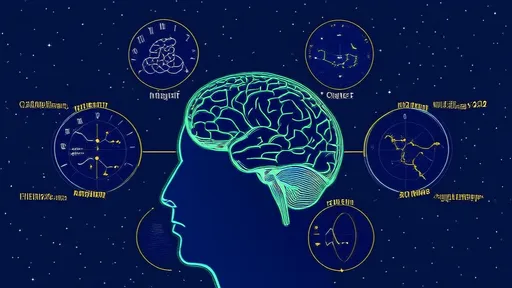
In the evolving landscape of workplace psychology and personal development, a fascinating new framework has begun to capture the imagination of HR professionals and individuals alike: Neurodiversity Constellation Advantage Recognition. This concept moves beyond the traditional, often clinical, understanding of neurodiversity—which encompasses conditions like autism, ADHD, dyslexia, and others—and reframes it not as a set of deficits to be managed, but as a constellation of unique cognitive strengths waiting to be identified and harnessed.
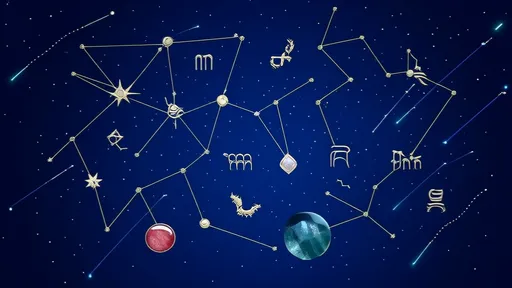
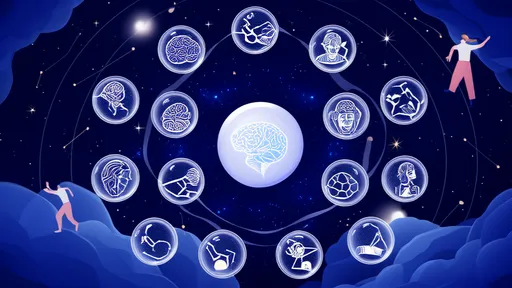
The very term constellation is deliberately chosen. It suggests a pattern of stars, each brilliant in its own right, that when connected, reveal a greater picture and purpose. Similarly, an individual's neurodivergent traits are not isolated quirks but interconnected strengths that form a unique cognitive profile. This paradigm shift is crucial. For too long, the narrative around neurodiversity has been one of accommodation and overcoming challenges. While support is undeniably vital, the Constellation Advantage model argues that the primary focus should be on recognition—actively seeking out and understanding the inherent advantages these different cognitive wiring patterns provide.
Consider the classic example of autism spectrum disorder. The conventional view might highlight difficulties with social communication. The Constellation Advantage view, however, focuses on the phenomenal ability for deep focus, pattern recognition, and systematic thinking that many autistic individuals possess. These are not mere "compensatory skills"; they are superpowers in fields like data analysis, software engineering, academic research, and quality assurance. An autistic mind might perceive a subtle error in a thousand lines of code or identify a trend in a massive dataset that a neurotypical brain would filter out as noise. This isn't a disadvantage; it's a competitive edge.
This principle extends powerfully to ADHD. The diagnostic criteria speak of inattention and hyperactivity. The constellation lens, however, reveals a mind built for crisis management, creative brainstorming, and hyper-focus on passion projects. Where a neurotypical brain might follow a linear path, the ADHD brain makes rapid, non-linear connections, often leading to groundbreaking innovations and "outside-the-box" solutions. In dynamic, fast-paced environments that require constant adaptation—such as emergency rooms, startup cultures, or artistic endeavors—this cognitive style is not a hindrance; it is the engine of success.
Dyslexia, too, is reimagined through this strength-based framework. The challenge with traditional reading and writing can obscure formidable strengths in spatial reasoning, narrative thinking, and big-picture conceptualization. Many renowned architects, engineers, entrepreneurs, and artists are dyslexic. Their brains are wired to see the world in three dimensions, to understand how systems interconnect, and to tell compelling stories. They don't just read a map; they visualize the entire terrain. They don't just solve a problem; they reimagine the entire system to prevent the problem from occurring again.
The practical application of Neurodiversity Constellation Advantage Recognition is transforming hiring and team building. Progressive companies are moving away from generic interviews that often unfairly disadvantage neurodivergent candidates. Instead, they are implementing strength-based assessments. These might involve practical problem-solving tasks, portfolio reviews, or work-sample tests designed to illuminate how a candidate thinks, not how well they perform in a high-pressure social interview. The goal is to match the individual's unique constellation of strengths to the specific cognitive demands of a role.
Furthermore, this approach fosters truly inclusive environments. When a team leader understands that one member's strength is meticulous detail and routine, while another's is rapid ideation and adaptability, they can allocate tasks strategically. This creates a symbiotic ecosystem where different cognitive styles complement rather than conflict with each other. The detail-oriented autistic employee ensures the brilliant, big-picture idea from their ADHD colleague is executable and free of errors. Together, they achieve far more than a homogenous team ever could.
On a personal level, embracing this model can be profoundly liberating. Many neurodivergent adults carry years of internalized criticism, having been told they are "lazy," "disorganized," "disruptive," or "not living up to their potential." Discovering that their brain isn't broken—it's just differently wired for a different kind of excellence—can be a watershed moment. It shifts the journey from one of masking and compensation to one of self-discovery and empowerment. It allows individuals to seek out environments, careers, and projects where their neurological constellation will shine brightest.
Of course, this is not to romanticize the very real challenges that can accompany neurodivergence. Sensory overload, executive dysfunction, and social fatigue are real and require support, understanding, and reasonable accommodations. The Constellation Advantage model does not ignore these challenges; rather, it argues that by first focusing on and valuing the inherent strengths, we create a foundation of respect and confidence from which to collaboratively address the difficulties. It's a "strengths-first" approach.
In conclusion, Neurodiversity Constellation Advantage Recognition is more than a new HR trend. It is a fundamental rethinking of human potential. It asks us to look up at the night sky of human cognition and not see chaos or missing stars, but to connect the dots and see the incredible patterns—the hunters, the queens, the dragons—that have been there all along. By learning to recognize these constellations, we don't just create more equitable workplaces; we unlock a vast reservoir of untapped talent, creativity, and innovation that benefits us all. The future belongs to those who can see the strength in different minds.

By /Aug 25, 2025

By /Aug 25, 2025

By /Aug 25, 2025

By /Aug 25, 2025

By /Aug 25, 2025

By /Aug 25, 2025
By /Aug 25, 2025

By /Aug 25, 2025
By /Aug 25, 2025

By /Aug 25, 2025
By /Aug 25, 2025

By /Aug 25, 2025

By /Aug 25, 2025

By /Aug 25, 2025

By /Aug 25, 2025

By /Aug 25, 2025
By /Aug 25, 2025

By /Aug 25, 2025

By /Aug 25, 2025

By /Aug 25, 2025